Saturday, January 27, 2007

2006 Books List

I decided at the beginning of 2006 to try to keep up with the books I read during the year. Below is a list that I think must be incomplete, since I don’t believe I wrote everything down. First are the books that I read completely, followed by a second list of books that I read only in part, which could mean anything from a few paragraphs to a couple hundred pages. The fact that I only read part of a book does not imply that it was a bad book or couldn’t keep my attention (though in some cases that is true); rather, it means that, for one reason or another, I wasn’t able to complete it at the time. Sometimes I have to stop what I’m doing and read something related to a writing project I'm engaged in. Sometimes a discussion with a friend or family member prompts me to read something to be better informed on the subject. Sometimes I just pick up an old favourite and just jump into it for a random chapter or two. At times I just don’t get back to the previous book, or at least for a while.

Apart from grouping an author’s books together, these are in no particular order. Short stories are included in the second list, as they don't represent an entire book read.

What were your favourite books during the year?


Here are the books read entirely:

1. The Everlasting Man (G.K. Chesterton)
2. The Flying Inn (G.K. Chesterton)
3. Four Faultless Felons (G.K. Chesterton)
4. The Man Who Was Thursday (G.K. Chesterton) (3rd time)
5. The Club of Queer Trades (G.K. Chesterton)
6. The Man Who Knew Too Much (G.K. Chesterton)
7. Lepanto (G.K. Chesterton)
8. Wise Blood (Flannery O’Connor)
9. The Da Vinci Code (Dan Brown)
10. Wise Words: Family Stories That Bring the Proverbs to Life (Peter Leithart)
11. Against Christianity (Peter Leithart)
12. Harry Potter and the Sorcerer’s Stone (J.K. Rowling) (2nd time)
13. Harry Potter and the Chamber of Secrets (J.K. Rowling) (2nd time)
14. Carry On, Jeeves (P.G. Wodehouse) (2nd time)
15. Very Good, Jeeves (P.G. Wodehouse) (2nd time)
16. Jeeves in the Morning (P.G. Wodehouse)
17. The Magician’s Nephew (C. S. Lewis) (Can't remember how many times)
18. The Silver Chair (C.S. Lewis) (Can't remember how many times)
19. Taliessin Through Logres/The Region of the Summer Stars/Arthurian Torso (Charles Williams/C.S. Lewis)
20. War in Heaven (Charles Williams)
21. The Last Disciple (Hank Haanegraaff and Sigmund Brouwer)
22. The Essential Calvin and Hobbes (Bill Watterson)
23. Yukon Ho (Bill Watterson)
24. The Leper of St Giles
(Ellis Peters)
25. Godless: The Church of Liberalism (Ann Coulter)
26. For All the Saints? Remembering the Christian Departed (N.T. Wright)
27. More Than a Skeleton (Paul Maier)
28. Never Call Retreat: Lee and Grant: The Final Victory (Newt Gingrich/William R. Fortschen)
29. Cricket on the Hearth (Charles Dickens)
30. America Alone: The End of the World As We Know It (Mark Steyn)
31. Zeal of Thy House (Dorothy L. Sayers) (4th time)


Here are the books that were regrettably (in most cases) unfinished:

1. The Foresters: Robin and Marian (Alfred Lord Tennyson)
2. The Challenge of Jesus: Rediscovering Who Jesus Was and Is (N.T. Wright)
3. The Crown and the Fire: Meditations on the Cross and the Life of the Spirit (N.T. Wright)
4. The Case for Covenant Communion (Greg Strawbridge)
5. The Case for Covenantal Infant Baptism (Greg Strawbridge)
6. Paedofaith: A Primer on the Mystery of Infant Salvation and a Handbook for Covenant Parents (Rich Lusk)
7. The Federal Vision (Steve Wilkins/Garner)
8. The River/Good Country People/The Displaced Person/Wildcat/A Good Man is Hard to Find/A Temple of the Holy Ghost (from O’Connor: Collected Works, Flannery O’Connor)
9. Trinity and Reality: An Introduction to the Christian Faith (Ralph Smith)
1o. A Generous Orthodoxy: Why I am a Confused, etc, Christian (Brian McLaren)
11. Lee and Jackson: Confederate Chieftains (Paul D. Casdorph)
12. How the Irish Saved Civilization: The Untold Story of Ireland’s Heroic Role from the Fall of Rome to the Rise of Medieval Europe (Thomas Cahill)
13. Lillith (George MacDonald)
14. The Wise Woman (George MacDonald)
15. The Valley of Fear (Sir Arthur Conan Doyle)
16. The Abominable History of the Man with Copper Fingers (from Lord Peter: The Complete Lord Peter Wimsey Stories, Dorothy L. Sayers) (2nd time)
17. Creed or Chaos (Dorothy L. Sayers)
18. Henry V (William Shakespeare)
19. The Return of the King (J.R.R. Tolkien)
20. Descent Into Hell (Charles Williams)
21. How Right You Are Jeeves (P.G. Wodehouse)
22. The Most of P.G. Wodehouse (P.G. Wodehouse)
23. City of God (Augustine)
24. A Reformation Debate (John Calvin, Jacopo Sadoleto)
25. The Origin of Species By Means of Natural Selection or The Preservation of Favoured Races in the Struggle for Life (Charles Darwin)
26. How Should We Then Live: The Rise and Decline of Western Thought and Culture (Francis Schaeffer)
27. Knowing God (J.I. Packer)
28. Demon Possession (ed, John Warwick Montgomery)
29. More Liberty Means Less Government: Our Founders Knew This Well (Walter Williams)
30. Omnibus III: Reformation to the Present (ed, Douglas Wilson and Ty Fischer, with a contribution by Yours Truly)
31. Mother Kirk: Essays and Forays in Practical Ecclesiology (Douglas Wilson)
32. Federal Husband (Douglas Wilson)
33. My Life For Yours: A Walk Through the Christian Home (Douglas Wilson)
34. The Oxford History of Christian Worship (ed, Geoffrey Wainwright and Karen B. Westerfield Tucker)
35. From Cottage to Workstation: The Family’s Search for Social Harmony in the Industrial Age (Allan C. Carlson)
36. Letters to Malcolm: Chiefly on Prayer (C.S. Lewis)
37. God in the Dock: Essays on Theology and Ethics (C.S. Lewis)
38. The Pilgrim’s Regress: An Allegorical Apology for Christianity Reason and Romanticism (C.S. Lewis)
39. The Gospel According to Tolkien: Visions of the Kingdom in Middle-earth (Ralph Wood)
40. The Encyclopaedia of the Middle Ages (Norman Cantor)
41. Bullfinch’s Mythology: The Age of Chivalry (Thomas Bullfinch)
42. Piers Plowman (William Langland)
43. The Writer’s Digest Handbook of Novel Writing
44. General Washington’s Christmas Farewell: A Mount Vernon Homecoming 1783 (Stanley Weintraub)
45. Our Nation’s Archive: The History of the United States in Documents (ed, Erik Bruun and Jay Crosby)
46. The Journals of Lewis and Clark (Meriwether Lewis and William Clark, ed, Anthony Brandt)
47. The Real Lincoln: A New Look at Abraham Lincoln, His Agenda, and an Unnecessary War (Thomas J. DiLorenzo)
48. Lincoln Unmasked: What You’re Not Supposed to Know About Dishonest Abe (Thomas J. DiLorenzo)
49. An Honourable Defeat: The Last Days of the Confederate Government (William C . Davis)
Theodore Roosevelt (Louis Auchincloss)
50. Southern Tales (Webb Garrison)
51. Scotland: The Story of a Nation (Magnus Magnusson)
52. Scotland: A Short History (Christopher Harvie)
53. 1314: Bannockburn (Aryeh Nusbacher)
54. Troubadour for the Lord: The Story of John Michael Talbot (Dan O’Neill)
55. In the Arena: An Autobiography (Charlton Heston)
56. The Size of Chesterton’s Catholicism (David W. Fagerberg)
57. Crossing the Threshold of Hope (John Paul II)
58. Triumph: The Power and the Glory of the Catholic Church (H.W. Crocker III)
59. The Blood of the Moon: The Roots of the Middle East Crisis (George Grant)
60. The Autobiography of G.K. Chesterton (G.K. Chesterton)
61. Glory and Honor: The Musical and Artistic Legacy of Johann Sebastian Bach (Gregory Wilbur)
62. Michelangelo and the Pope’s Ceiling (Ross King)
63. Stonewall Jackson: The Black Man’s Friend (Richard G. Williams, Jr)
64. Roosevelt: Letters and Speeches (Theodore Roosevelt)
65. America: The Last Best Hope, Vol I: From the Age of Discovery to a World at War (William J. Bennett)
66. American Courage: Remarkable True Stories Exhibiting the Bravery That Has Made Our Country Great (ed, Herbert W. Warden III)
67. Confederate Emancipation: Southern Plans to Free and Arm Slaves During the Civil War (Bruce Levine)
68. Encyclopedia Brown and the Case of the Secret Pitch (Donald J. Sobol)

Friday, January 26, 2007

My Space

Not sure why, but I have a My Space page, now. I've actually had it for a while, but it didn't seem important enough to mention. However, if you'd like to check it out, you can do so by clicking the title of this post, above.

Friday, January 19, 2007

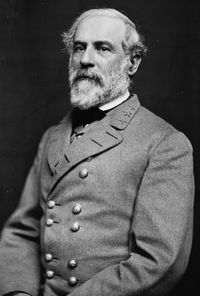
Happy 200th Birthday, General Lee

Today is the 200th anniversary of the birth of a man who (it should not be so difficult to say) is certainly one of the greatest Americans in history: General Robert Edward Lee. It is only difficult because our culture does not understand honour and righteousness as well as it once did. Lee was a man of almost unbelievable honour and integrity. After the war, he did, as one biography put it, more than any other American to heal the divisions between North and South.

We celebrated with our children by watching Ron Maxwell’s fine film, Gods and Generals. Focussing attention on three battles in the first two years of the War Between the States—First Manassas, Fredericksburg, and Chancellorsville, the movie portrays the greatest military partnership of all times, that of General Lee with his ‘right arm,’ commander of the second corps of the Army of Northern Virginia, General Thomas Jonathan ‘Stonewall’ Jackson.

There are many fine moments in the film, including a heart-wrenching battle before the stone wall at Fredericksburg between two Irish regiments: one Northern, one Southern. ‘Don’t they know we’re fighting for our freedom?’ cries a Southern Irish officer, incredulous that his old countrymen could be fighting for the Yankees. ‘Didn’t they learn anything at the hands of the English?’ ‘These Irish Rebels are our countrymen,’ shouts the Northern Irish officer, even as he urges his men on in their hopeless charge. But one of the most telling moments in the film is also just before the battle of Fredericksburg, when Colonel Joshua Chamberlain of the Twentieth Maine (later to earn lasting glory for his heroic defence of Little Round Top at the Battle of Gettysburg), speaks to his men before the battle, just as the vanguard of the Union forces are crossing the Rappahannock river into Virginia. Maxwell puts into Chamberlain’s mouth the words of Marcus Lucanas, Roman poet, chronicling the military crossing of the Rubicon (an act unlawful under Roman law) by Julius Caesar. I say it is telling, because at the same moment as this speech, the Union Army of the Potomac is also crossing a river, and invading their own country. Notice the italics, which are my own, and ask your self whether Maxwell’s intention as a screenwriter and as a director could be clearer:


In the Roman civil war, Julius Caesar knew he had to march on Rome itself, which no legion was permitted to do. Marcus Lucanus left us a chronicle of what happened. ‘How swiftly Caesar had surmounted the icy Alps, and in his mind conceived immense upheavals, coming war. When he reached the little Rubicon, clearly through the murky night appeared a mighty image of his country in distress; grief in her face, her white hair streaming from her tower-crowned head. With tresses torn and shoulders bare, she stood before him and sighing, said: “Where further do you march? Where do you take my standards, warriors? If lawfully you come, if as citizens, this far only is allowed.” Trembling struck his limbs, and weakness checked his progress, holding his feet at the river's edge. At last he speaks. “Oh, thunderer, surveying great Rome's walls from the Tarpeian rock. Oh, Phrygian, house gods of Lulus, clan and mysteries of Quirinus, who was carried off to heaven. Oh, Jupiter of Latium, seated in lofty Alba and hearths of Vesta. Oh, Rome, equal to the highest deity, favor my plans. Not with impious weapons do I pursue you. Here am I, Caesar, conqueror of land and sea, your own soldier everywhere, now too if I am permitted. The man who makes me your enemy, it is he will be the guilty one.” He broke the barriers of war and through the swollen river swiftly took his standards. When Caesar crossed the flood and reached the opposite bank from Hesperia 's forbidden fields, he took his stand and said: “Here, I abandoned peace and desecrated law. Fortune, it is you I follow. Farewell to treaties. From now on, war is our judge.”

Hail Caesar. We who are about to die salute you.'

Maxwell compares Lincoln’s armies to Caesar, unlawfully inciting war against his own countrymen, and feeble pleas of patriotism (‘O Rome, equal to the highest deity…the man who makes me your enemy, it is he will be the guilty one’) his only excuse. He tells us that the North, ‘abandoned peace and desecrated law,’ and said ‘farewell to treaties…from now on, war is our judge.’ Implicitly, the South is the 'mighty image of his country in distress,’ pleading for peace. In the movie, Southerners, like Jackson, quote Scripture, while Northerners, like Chamberlain, quote pagan (albeit beautiful) poetry. The meaning is clear enough, and the sympathies of filmmaker Maxwell (blessings upon him), equally clear (though certainly he would also sympathise with many of the fine soldiers—like Chamberlain and General Winfield Hancock, for instance— in the Union forces as well). It is a fine movie, and a fine way to celebrate the birth of one of our great national and Southern heroes, Robert E. Lee.

The War Between the States was one of the saddest, most glorious, beautiful, horrifying, tragic, noble moments in our country’s history. We are fools if we ignore its stories, or its lessons. Let this day be a reminder to us of our own history, and especially of the nobility of this great and good man.

Tuesday, December 19, 2006

Polycarp: The Crown of Fire in Turkish


Another reason to be thankful during this Advent Season. I received an email today from Catherine MacKenzie of Christian Focus Publications, who published both Polycarp: The Crown of Fire and Talking of Dragons. Catherine also served as editor on Polycarp. She told me that they had been approached by a missions contact in the Middle East who wanted to arrange a translation of Polycarp into Turkish. At this point, we have no definite date for when this will happen, or when work on the translation will begin, but it is sufficient cause for thanks to know that it is being read by folks in that part of the world who would like to see the book in the language of the people. Even more interesting is the fact that Polycarp was the bishop of Smyrna, which survives today as the city of Izmir in modern Turkey. This may in fact account for part of the interest, as Polycarp would be better known there than in many parts of the world.

Friday, December 15, 2006

Omnibus III

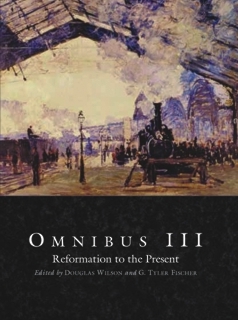
Last year, Doug Wilson and Marlin Detweiler graciously invited me to write an essay for their Omnibus literature curriculum, published by Marlin's Veritas Press. Omnibus I and Omnibus II, which were written for seventh and eighth graders, respectively, came out last year and the year before last. Omnibus III, including my contribution - an essay on Ernest Hemingway's The Old Man and the Sea - ships on 22 December. This is a great resource for homeschools and classical schools, and I am honoured to be a part of it. The series also includes contributions from the likes of Doug Wilson, who also co-edited the book, Peter Leithart, George Grant, Steve Willkins, and many others.

Wednesday, November 08, 2006

Homeschooling I


'I advise no one to place his child where the Scriptures do not reign paramount. Every institution in which men are not increasingly occupied with the Word of God must become corrupt...I am much afraid that schools will prove to be the great gates of hell unless they diligently labour in explaining the Holy Scriptures, engraving them in the hearts of youth.'

Martin Luther

This is the first of what I hope to be many posts telling the story of how we came to settle on homeschooling as the best option for the education of our little ones. I also plan to answer some questions and concerns about homeschooling (not that there aren’t many fine resources available for the curious: perhaps I will dedicate an entire post to listing some of these resources).

It began with a desire to come to grips with Scriptural teaching on raising our little ones. Not surprisingly, our first step on this path was the realisation that there was no bloody way we could ever send our kids to the public schools (hereafter, ‘government schools,’ which is more accurate). Why? One of the clearest teachings of Scripture is that parents, and especially fathers, are responsible for the education of their own children. Not the State. Not even the Church, primarily, but parents. Here are the key passages:

Now this is the commandment, the statutes and the rules that the LORD your God commanded me to teach you, that you may do them in the land to which you are going over, to possess it, that you may fear the LORD your God, you and your son and your son's son, by keeping all his statutes and his commandments, which I command you, all the days of your life, and that your days may be long… Hear, O Israel: The LORD our God, the LORD is one. You shall love the LORD your God with all your heart and with all your soul and with all your might. And these words that I command you today shall be on your heart. You shall teach them diligently to your children, and shall talk of them when you sit in your house, and when you walk by the way, and when you lie down, and when you rise. You shall bind them as a sign on your hand, and they shall be as frontlets between your eyes. You shall write them on the doorposts of your house and on your gates. (Deuteronomy 6:1-2, 4-9)

Fathers, do not provoke your children to anger, but bring them up in the discipline and instruction of the Lord. (Ephesians 6:4)

Here the responsibility is given to fathers to teach their children. But that’s just talking about religious teaching, right? Government Schools should teach the important, er, the other stuff, right?

Wrong. The word translated ‘instruction’ in Ephesians 6 is the Greek word paideia. It was a very familiar word to Greeks, and meant, in essence, an entire life-and-worldview education, including everything from history to art to language to athletics to politics to family life to mathematics and science and philosophy. In our culture, this would also include how we view things like television, movies, and popular music. Everything, in other words. This, the father is to give to his children. This kind of education was not unknown to the classical culture. In ancient Rome, for example, Cato the Elder was known for teaching his son everything from military training to morals and academics. St Paul is saying that fathers should provide the same thing for their children, with this exception: it is ‘the paideia of the Lord,’ so this whole life worldview education should be from the perspective of the Christian faith.

This means that government schools are patently unbiblical, and never an option for Christians (never!), for how can the State, an agnostic institution, teach our children ‘the paideia of God’? But this also means, unavoidably, that homeschooling is the best option. Christian schools fill a much-needed place for those who have come to realise that they must immediately get their children out of the government schools, but with Christian schools, fathers and mothers can do little more than occasionally check in on what their children are being taught, since nearly all of the teaching has been delegated to others. This is hardly in keeping with the Scriptural admonition for parents to do this teaching.

There is really no need to answer the expected rejoinder that ‘most parents don’t know algebra, biology, history, Latin, etc, enough to be able to teach them to their children.' Suffice it to say that the curriculum options have rather come of age in recent years, and there are extremely sophisticated options developed with the learning parent in mind, so that the parent can first learn, and then teach.

‘School,’ then, as popularly conceived, was out. Douglas Gresham, stepson of C.S. Lewis, put it wonderfully:

'as someone who has been trained and works in the field of post-childhood abuse trauma, and has devoted considerable thought to the matter, I have formed the opinion that the entire concept of school is flawed. In fact, it is a terrible mistake.

'Look what we do: we observe what God has designed, a pair of parents, one of each sex, and two pairs of grandparents, often with a few aunts and uncles thrown in. In fact, a Family. This is the unit designed by God Himself for the specific purpose and ministry of raising each new generation.

'Then what do we do? We take the child and remove him from this carefully designed support group of parents and close family members, all of whom share a genetic bond with the child, and plunge him into a mass group of his peers, all of whom are as ignorant and as demanding as he is, with one adult stranger supervising. In terms of the psycho-emotional development of the child, this is complete madness…

'Satan hates what God loves and God loves us, Mankind. The basic unit of Mankind is the family, so Satan has targeted the Family, and he has been pretty successful, mostly by using “good intentions.” I think that “School” is one of his very clever inventions. As far as I am concerned, schools are for fish.' (quoted from http://www.homescholar.org/Lewis%20articles.htm)

I heartily concur with Gresham’s statement and am so glad to have someone of his calibre speaking the truth about this issue.

And so, we are homeschooling our three little ones (all of them, not just the oldest, who is now ‘school age’). This education begins, like life, at conception, and never ends. It involves what R.C. Sproul Jr has called ‘the three Gs’: who God is, what God has done, and what God requires. To accomplish this with the most breadth and depth, and in keeping with the implications of Paul’s ‘paideia of the Lord,’ we are using what is generally known as the Classical method of education. This is an academically rigorous approach to education that responds to children as they naturally develop, and the strengths of the various developmental phases through which they pass on their way to adulthood. My next post on this subject will look more closely at the Classical method, and what it means.

Some will say, ‘is homeschooling legal?’ Or, as it is sometimes put, when someone finds that we are not putting our children in school, or are not operating on the school-year schedule of the government or even private schools, ‘isn’t that against the law?’

Only a few years ago, homeschooling was actually illegal in many states. It is now legal in all fifty states. There are only light regulations for homeschoolers in my state (North Carolina). There shouldn’t be any, of course. Truly, we no longer have any idea what words like ‘liberty’ or ‘freedom’ mean, or we would never tolerate even the slightest attempt at governmental oversight of our children’s education.

But for now, homeschooling is legal throughout the United States. We as parents choose both the form and content of our children’s education, which is as it should be. We seek to do so in wisdom, weighing our options carefully, determined to make the best use of these precious years. Little children love to learn, and I have no desire to miss even the smallest opportunity to teach them what is true, good, and beautiful. In future posts, I plan to discuss the choices we have made both with regard to curricula, and to schedule. I would encourage every Christian parent reading this to consider carefully, above all, the question of whether to keep their children’s education in the hands of our enemies. A good place to start is Doug Wilson’s outstanding book, Excused Absence: Should Christian Kids Leave Public Schools? (Crux Press, 2001).

Tuesday, November 07, 2006

Brian McLaren vs The Middle Ages


Click the title above to go to the original post that prompted me to write this. This was a comment I made on a blog called 'The Rabbit Hole.' The original post was an extended quote from Brian McLaren's book A New Kind of Christian, in which McLaren, in the course of making an unrelated point, attacks Medieval Christendom, which always amounts to fightin' words for me. Brian McLaren, who also wrote the book, A Generous Orthodoxy, is a popular author and leader of the so-called 'Emergent Church' movement. Here is my response in full.

Your quote from Brian McLaren: ‘But on a deeper level, if you told them [Medieval Christians] you didn't believe in the pope and you didn't accept that kings ruled by divine right and you didn't believe that God created a universe consisting of concentric spheres of ascending perfection, and if you let it slip that you agreed with Copernicus that the earth rotated around the sun, you would surely be tried as heretics and perhaps burned at the stake.’

Couldn’t let this outrageous statement pass unchallenged. While there is perhaps something to be said for McLaren’s larger point that people tend to see the Christian faith through the lens of whatever worldview they already hold (and that we are just as guilty of this as the Medievals or anyone else), McLaren’s view of Medieval Christendom is far too simplistic (as is his view of many things, sad to say), not to mention wildly inaccurate. A standard text (Norman Cantor’s The Encyclopaedia of the Middle Ages) that I picked up from a shelf at home, almost at random, is sufficient to demonstrate this, but others could just as easily be used.

Believing that ‘God created a universe consisting of concentric spheres of ascending perfection’ (he’s referring here to the Aristotelian/Ptolemaic model of Astronomy), though widely held, was not exactly a litmus test for Christian orthodoxy. While there was controversy over Copernicus’s theory, and later over Galileo’s support of Copernicus through his new invention of the telescope, there was no persecution of those who differed. And Copernicus was opposed as much by the scientific community of his day as by the ecclesiastical, a fact that is often forgotten. Further, it must be remembered that ‘…the breakthrough astronomical concept—that some bodies in the sky revolve around something other than the earth—had already been made by the beginning of the Middle Ages.’ (Cantor, The Encyclopaedia of the Middle Ages) It is true that scientists and churchmen at the time of both Copernicus and Galileo felt that the theory did not yet have sufficient proof (a fact that has been admitted by some in our own day) to establish it as factual. It is also true that they believed a heliocentric model contradicted Scripture, an idea that is now universally recognised (by the Church) as untrue. So, yes, the Church was in error, but, contra McLaren, no one was ever burned at the stake for believing in the Copernican system. This notion of McLaren’s that knowledge was somehow static during the Middle Ages, and that anyone who questioned that knowledge was immediately denounced or executed, is utterly ridiculous, even slanderous. The Middle Ages lasted a thousand years: does he truly think that the whole of that period can be reduced to his simplistic summaries?

McLaren’s statements regarding the divine right of kings needs serious adjusting as well. Cantor points out that there were several competing views of kingship in the Middle Ages, only one of which could be labelled as ‘the divine right of kings,’ a notion inherited from the Roman Empire. Indeed, it was in the Middle Ages that men first began to assert that constitutional law was higher than the king, and that the king’s will could be opposed if it went contrary to the law. The Gregorian Reform (late eleventh century) was a prime example of this. Cantor puts it this way:

‘…the papacy [began] talking about kings in a purely functional manner, comparing them to swine herders…vanguard ecclesiastical thinkers…developed liberal ideas aimed at limiting the claims and exercise of kingship. A king’s actions that flouted justice lost their validity, it was held. The law vested in the people and its constitutional assemblies stood higher than the king…These disputes about the nature, functioning, and limits of kingship were an important legacy of the Middle Ages…’

As regards the pope, the Medieval movement towards Conciliarism began to assert that the whole Church, assembled in ecumenical council, was a higher authority than the pope. Or we could consider the East-West schism of the eleventh century (1054) in which the whole of the Eastern Church (which had never truly accepted the sole authority of the bishop of Rome) finally rejected the rule of the Western pope. Or the Great Schism of the fourteenth century, in which there were two competing popes: one in Rome, and one in Avignon (later, there were three popes for a short period of time). During this Schism, Conciliarism was invoked to establish general councils as a higher authority than the pope, even reserving the right to declare and depose popes. Dante (died 1321), in his vision of Hell (The Divine Comedy), meets, not only such desperate sinners as thieves, gluttons, and even Judas Iscariot himself, but also popes! And William Langland (died 1385-1386), in his Piers Plowman, challenges Christians to trust more to God’s mercy than to Papal pardons and indulgences. Contra McLaren, one might almost say that anti-papacy, far from being foreign to the Medievals, was almost characteristic of the Middle Ages.

Also, McLaren said this: ‘To the Christian culture of medieval Europe, none of you today could be considered real Christians.’ The Medieval view of the Church was much higher (not to mention more Generous and more Orthodox) than McLaren is evidently capable of grasping. Are you baptised in the Triune name? Then you are (in a certain sense) a Christian, and would be considered so by Medieval men and women. Whether you are a good Christian is another question, perhaps, as it always is. For now, it is enough to say that McLaren’s view of our Medieval forefathers is anything but ‘Generous.’

Look, I know that all this is hardly the point McLaren was making, but it is never right to tamper with the truth (whether deliberately or through laziness in fact-checking) in order to make a good point. And this laziness has resulted in an unwarranted broadside attack against our fathers in the faith—something that McLaren seems to be well-known for.

William Chad Newsom
Familystorytelling.net

Tuesday, October 10, 2006

The Amish Are Right

Below is an article written by my sometime editor (and the first man to pay me for writing - thanks, Warren!), Warren Smith of World Newspaper Publishing. Here Warren wrestles with the very different approach to 'youth ministry' one finds among the Amish and Mennonite Communities, in light of the recent tragic shootings of several Amish children. 'Different,' that is, from the manifestly failed system in most evangelical churches. Historical note: the Amish are the descendents (spiritual and lineal) of the Anabaptists, who first came to prominence as part of the 'Radical Reformation,' which believed that Luther and the other magisterial Reformers did not go far enough in purging the church of heresy and immorality. Some, like Thomas Müntzer, were radical and revolutionary, while the Amish and Mennonites, of course, are peaceful. Warren's article is excellent and right on target. Each Christian father and mother, especially those of us idenitifiable within the broader 'Evangelical' community, should take these words to heart.

Learning From The Amish

By Warren Smith

COMMENTARY--Since World War II, the evangelical church has spent a lot of time, money, and energy on activities designed to grow the church – from bus ministries in the 1960s to rock music in the 70s and 80s to direct mail campaigns today. Individual churches have grown dramatically, but the truth is that there are more people and fewer churches in America than at any time in the last half-century. And the influence of the church in this country is perhaps at an all-time low.

A couple of items in the headlines this week provide a hint as to why things have become this way. The first item that caught my eye was a "New York Times" article from Oct. 6 titled "Evangelicals Fear The Loss Of Their Teenagers." The article quoted a Barna survey saying that most evangelical teenagers leave their faith when they reach adulthood. The article also quoted Ron Luce, who leads a ministry called Teen Mania. Luce told the "Times," "We’ve become post-Christian America, like post-Christian Europe. We’ve been working as hard as we know how to work — everyone in youth ministry is working hard — but we’re losing."

Of course, I think a case could be made – and this is one of the ironies here -- that the REASON we’re losing our teens is because we have "outsourced" the discipleship of our children to ministries such as Teen Mania. It’s much harder to talk with our children about Jesus than to send them to someone who does that for a living. And as long as their friends are there, and you keep the program moving along, the kids don’t seem to notice that they’re not getting the best of their parents.

In short, we lose our teens because they eventually grow up and wise up at least enough to realize they’ve been cheated by their parents and by the church.

By the way, Teen Mania does about $25-million a year in revenue, mostly from product sales and conference registrations. Maybe my journalistic cynicism has gotten the better of me, but I’m growing weary of millionaire ministers telling me how bad things are so I will send them money – money they will use with good intentions, but which is actually -- clear-headed analysis shows -- making things worse.

Compare that approach to "youth ministry" to what we saw from the Amish this week. I learned more about Jesus from the Amish grandfather who forgave the killer of his grandchildren than I have learned from many a seminar or survey. The families of the victims embraced the family of the killer, even inviting them to the funeral and setting up a fund for the killer’s wife and children.

This week I interviewed Dr. Donald Kraybill, one of the nation’s leading experts on the Amish and Mennonite cultures, and he told me that the Amish don’t have the problem that evangelicals are wringing their hands over, this problem of their kids leaving their faith. In fact, more than 90 percent of their children embrace their parents’ religion when they reach adulthood. And it’s not because these Amish fathers and grandfathers are trying to be "relevant." Just the opposite. These Amish kids embrace their parents’ faith because they spend time with them, and know their hearts, and ultimately discover that the faith of their fathers is the real deal.

I’m not quite ready to give my car away and join the Amish or the Old Order Mennonites, but you’ve got to admit that they’re doing something right. The tragic shooting of 10 Amish children in Pennsylvania clearly demonstrates that you can’t fully insulate yourself from the evils of the world, but one of the reasons this story has become an international sensation is precisely because it happens so rarely in such communities, and when it did happen, we learned how genuine and deep the faith of these people really is.

As evangelicals we’ve got to remember that the Great Commission tells us not to make converts, but to make disciples. Jesus said to teach all things I’ve commanded. We evangelicals – and I include myself in that number – have become too enamored with what I call body count evangelism. How many people walked the aisle this week? How many people showed up at our conferences? How much money are we taking in and spending? What we should be concerned about is how many of us are still standing firm for Jesus when the times get hard.

For the people in Nickel Mine, Pennsylvania, the times got very hard indeed this week. But from what I can see, they also have a faith that will see them through. A faith about which many of us – even those of us who call ourselves committed, evangelical Christians – still have a lot to learn.
---------
Warren Smith is the publisher of the Evangelical Press News Service. You can e-mail him at warren.smith@thecharlotteworld.com

Friday, October 06, 2006

St Anne's Pub Interview

Late last year I was privileged to be interviewed by St Anne's Pub, a fine audio journal dealing with issues of theological and cultural importance. This interview was their # 1 downloaded item during December of 2005 (timing was the key here: we talked a lot about C.S. Lewis and The Chronicles of Narnia, and the interview was released around the time of the film version of The Lion, the Witch and the Wardrobe). Stuart Bryan and I talked about my latest book, Talking of Dragons, the use of magic in stories, the Bible and mythology, the Santa Claus myth, Lewis and his friend J.R.R. Tolkien, and much more. The interview was part of St Anne's 'On Tap' feature, which used to be available only for a short time, so when they took it off the site, I added the MP3s of the interviews here on this website. Subsequently, there were problems with the files and they have been unavailable for a while, now. But St Anne's has now reposted all their 2005 'On Tap' features, including the three-part interview they did with me. You can listen to the interview here. My interview is found on entries # 5, 6, and 7. If you want to know more about my writing, and why I do the things I do, this is the best place to start. Thanks again to Stuart, Michael Collender, Joost Nixon, and all the fine folks at St Anne's Pub.

Monday, July 24, 2006

Legends for Little Ones

I recently completed a manuscript for a series of books for younger children, Legends for Little Ones. These books, inspired by a reading time with my son, William, are simple retellings of great legends from history and literature, aimed at children anywhere from birth to around five or six years old. They are intended to be read to children by their parents, and for young readers to read on their own. The first twelve cover legends from the lives of Ignatius of Antioch, St George, St Patrick, St Brendan, King Arthur, Cædmon, Boniface, Alfred the Great, Robin Hood, Robert the Bruce, and Martin Luther. I am currently talking to two publishers, both of whom have very kindly expressed an interest in the series. And I have been wonderfully blessed to receive an endorsement of the books from one of my favourite authors and speakers, Dr George Grant. I will post more about Legends for Little Ones later, but for now, here are Dr Grant's gracious words:

'In an age where heroes are few and far between and when the great stories of our Christian legacy are either lost and forgotten or despised and repressed, Legends for Little Ones is a rich gift to us all. These stories are, as you will soon discover, both timeless and timely. So, curl up in a big chair, pull your little ones into your lap, and discover anew the glories of our magnificent legacy of beauty, goodness, and truth.'

Dr George Grant, director of The King's Meadow Study Center, and author of The Christian Almanac, The Micah Mandate, and The Patriot's Handbook.