Saturday, July 25, 2015

Birthday Poems: William and Nathanael 2010

Here's another poem written for William, along with his brother, Nathanael: I combined their poems this particular year (2010). Inspired by John Milton's Comus, this is one of my all-time favorites.


Band of Brothers
A Poem for Nathanael, on the Occasion of His Fourth Birthday (May 3, 2010); and William, on the Occasion of his Seventh Birthday (July 19, 2010)
Given, With Love, By Your Father

Nathanael:
Well, here we are, just me and you,
There’s only two of us.
We boys, I mean: there’s only two;
Two brothers: we are small and few;
Whatever can we hope to do?

William:
Now, don’t despair, don’t fuss!

It’s true that we’re not army-size:
We can’t besiege a town.
But like the knight who charges, dies,
With noble luster in his eyes,
That gold and silver never buys;
And takes the foeman down;

So you and I are richly blessed
With courage from our Lord;
I’ve seen you, brother, sorely pressed,
Yet rise with valor, meet the test;
And you and I shall meet this Quest,
Come fire, death, or sword.

Nathanael:
Thanks, brother; now I’m set to try
To take the heights above;
For just two brothers—you and I—
By God’s dear grace may crack the sky;
We may not win but we can die,
To save that which we love.

As Jonathan and his servant went
Against a mighty crew;
So now two brothers have been sent,
To force the wicked to relent;
‘Til all heart-treasures have been spent;
And hearts are piercéd through.

William:
Well said, my brother! Now look to
The sword of steel you wear; 
Whatever can we hope to do?

Nathanael:
Nay, here were are, we happy few:
A band of brothers, small, but true;
A noble cross to bear.

Narrator:
Then bursting through the door to Hell,
Where Sorcery held sway;
Two brothers with a mighty yell,
Sent serpents spinning, beasts pell-mell;
And drave the Devil, tales do tell,
And nobly won the day.

Thus set they free their sisters twain,
Who, captured in the wood,
Refused the wizard’s cup to drain;
To keep their hearts from every stain;
And were enchanted for their pain,
For clinging to the Good.

And now the four walked hand in hand,
Walked in the dying gloam;
And knew not all that yet was planned,
Of twinkling stars and grains of sand:
That more would join their little band,
To grace their little home.

Friday, July 24, 2015

Family Lore: Kindling a Love of Story in Children

Here's a bit of information on an upcoming ebook release (later this Summer, hopefully). Stay tuned.

I am convinced that storytelling, so carefully woven into human nature by our Creator, is becoming a lost art to most of us, as we continue to outsource our storytelling needs to the movie-and-book making professionals. Nothing wrong with enjoying a good film or novel, of course; but something vital is lost when storytelling is no longer reflected in the life of churches and families. Better that we tell our own stories, however poorly, than to completely surrender this important work to the self-styled professionals.

Thus this little book, Family Lore: Kindling a Love of Story in Children. In seven short chapters, we’ll explore the importance of Story in the lives of children, and examine specific strategies for building a storytelling culture in our homes. The book is designed to be practical in nature: the last chapter is entirely devoted to suggestions you can put to work to help guide your kids in their growing love of Story. While the book is primarily written with parents in mind, the ideas here can certainly be used in classroom settings (day school or Sunday School) as well.

The Nicholas Book: A Legend of Santa Claus


I'm also posting here information on my books, in order to have a landing page for them, and for those who want more information on them. Here's one for a book I wrote for my kids, The Nicholas Book: A Legend of Santa Claus.


Pastor Douglas Wilson tells of a family who told their little girl that Santa Claus was not real, and received this reply: "Is Jesus real?" In a world filled with doubters and skeptics, who needs one more thing to confuse our children?

On the other hand, I, like many, grew up with the Santa Claus legend and very much enjoyed it. But because of stories like Pastor Wilson's, I was concerned to think carefully about what I taught my children concerning Saint Nicholas. For several years, I remained relatively silent on the issue, not saying much of anything about the Santa Claus legends one way or another. Eventually, of course, I had to take the time to settle the matter. To work through my own views on the various Christmas legends surrounding St. Nicholas, and to discover just what I needed to teach my children, I wrote The Nicholas Book: A Legend of Santa Claus.

If it comes down to a choice between losing Santa or losing Jesus, then Santa will have to go. But if it was possible to keep the Santa story, then I needed a story my children could grow into—not a story they would be forced to grow out of. As it stands now, children have to grow out of the Santa story, which is a sure sign that something is wrong. But it doesn't have to be that way. The great G. K. Chesterton said it well:

"What has happened to me has been the very reverse of what appears to be the experience of most of my friends. Instead of dwindling to a point, Santa Claus has grown larger and larger in my life until he fills almost the whole of it."

The best things of childhood are not lost when we become grownups: if they are truly worthwhile, we can keep them, albeit in a different form. But if the Father Christmas story was to be something my children could grow into, then that meant giving the story back to Legend and Mystery.

What am I trying to achieve with this book? It can be expressed in two ways:

First, I am trying to retain for my children the wonder, excitement, and joy of the Saint Nicholas legend, but in a better version of the story, and without lying to my children.

Second, I am trying to turn my children’s eyes back to Bethlehem, and away from the North Pole, but without killing the magic. For the death of magic is always accompanied by the birth of unbelief.

Here's the official description of The Nicholas Book:

"Journey back to small town America in 1959, as the story follows the adventures of Joshua and Rachel Kirk, two kids who set off on a quest to learn the truth about Santa Claus. Hearing of a mysterious book that may answer their questions, they head for The Old Page Bookshop; but on the way, they are pursued by enemies, one who wants revenge, and one who wants only the Book. To find the truth, Joshua and Rachel will have to face their fears, and learn to see the magic of the world with new eyes."

How can your family use and profit from this book? First, I would encourage you to read it with your children, every Christmas. It's a fairly short book, and if you read three chapters a night, you can finish it in less than a week. If you have a limited amount of time to read at night, just read a chapter or two, and spread it out over the two or three weeks of December leading up to Christmas. You can even read it after Christmas Day: after all, the traditional Twelve Days of Christmas begin on Christmas Day.

Second, the book was written to grow with your children, so that they will get something different out of it when they're ten or twelve than when they're six or eight. The Nicholas Book was written to replace the secular myth, but it also includes allusions to some of the modern-day stories, like the North Pole, and reindeer, so that you can keep those, if you choose, in your own family lore. Children will hear a new, and, I hope, engaging, version of how the secular myth fits in with the traditional legends, as they journey through The Nicholas Book.

As noted above, the two heroes of our story, Joshua and Rachel Kirk, discover an old book that tells (retells, actually) the story of Saint Nicholas. That story is important, and it will help you in teaching your children a Christian view of Santa Claus: the old book that they read symbolizes the Santa Claus story itself. Saint Nicholas belongs both to history and legend: the legendary elements we treat differently, as something surrounded by mystery, something that may or may not be true. In this legendary sense, children can choose to believe it or not; but either way, they must not miss the truth of Bethlehem, and the undoubted magic that is going on around them.


To purchase your own Kindle version of The Nicholas Book: A Legend of Santa Claus, click here. And remember, even if you don't own a Kindle, you can read Amazon Kindle books on your computer or phone. Click here to get your free Kindle app.

Science Arose Only Once

From Rodney Stark's The Victory of Reason: How Christianity Led to Freedom, Capitalism, and Western Success:

"Real science arose only once: in Europe. China, Islam, India, and ancient Greece and Rome each had a highly developed alchemy. But only in Europe did alchemy develop into chemistry. By the same token, many societies developed elaborate systems of astrology, but only in Europe did astrology lead to astronomy. Why? Again, the answer has to do with images of God...In contrast with the dominant religious and philosophical doctrines in the non-Christian world, Christians developed science because they believed it could be done, and should be done." (page 14)

Birthday Poems: William 2014

Continuing to post older family poems, and continuing with William's, since his birthday was this week, here's one from last year, and one of my favorites.


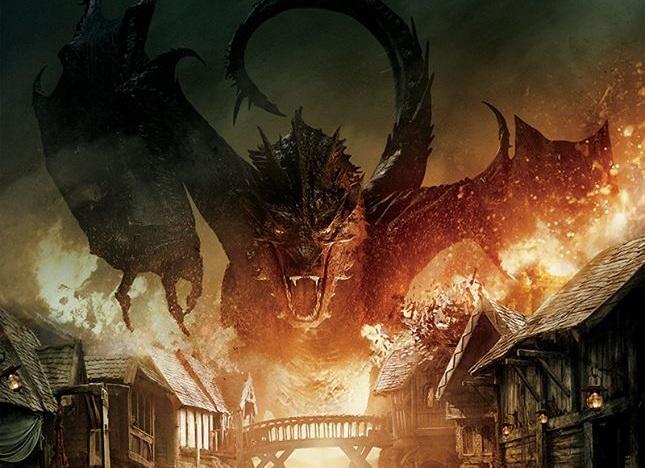
No Quarter for Dragons
A Poem for William on His Eleventh Birthday

Kill the Dragon! Lo, he comes,
And in his face a fire of hate;
But now I hear the warlike drums
Call us to stand before the gate.
Refuse to let him in!

He comes with armies at his back—
A legion flying through the air;
Preparing for a bold attack,
They fling their darts of black despair,
Their fiery darts of sin.

And William, they are here for you:
To wreck and ruin all your days,
To shade and shadow all that's true,
And set the house of faith ablaze:
A day of shock and awe.

These dragons following their lord,
Are sins, temptations, custom-made
For you; so sharpen now your sword,
For they are coming to invade
The citadel of Law.

You must fight on! For there can be
No treaty made with such as these;
No quarter! If you would be free,
The Black Flag o'er your enemies
Must fly and never fall.

So William, hear your father's word,
As birthday wishes now come true:
Be killing sin, or, rest assured,
It will be always killing you—
But hope in Christ for all.

Thursday, July 23, 2015

Birthday Poems: William 2013

I'm trying to gather all the past poems and stories I've written for my wife and kids and post them here, to give them a more permanent home. My oldest son William turned 12 a few days ago, so I thought I'd post one I wrote for him a couple of years ago, when he turned ten. I think this is clear enough from the poem, but I had missed writing his birthday poem the year before, which is the reason for the apology in the first stanza. Anyway, here it is.

The Builder
A Poem for William on His Tenth Birthday
By His Father, July 19, 2013

My son, draw near, and listen for a while,
To words I trust are worthy and worthwhile;
But first, confession: last year, as you know,
Your birthday poem simply did not show;
The annals of these years will thus reveal
A chasm at that point; for this I kneel
In penitence; for writing thus for you
May prove the best of all the work I do.

But now, with your forgiveness, let me speak
About a special day that falls this week:
Your birthday: you are ten years old today,
And of the many things that I could say,
There’s one that, like the tallest tree, stands out;
Like towers of a terrible redoubt;
A fitting image, for I know your heart:
To build: with skill, with cleverness, with art.

What churches, houses by your hand shall rise?
What towers to adorn the canvas-skies?
Shall new cathedrals wake in time to come?
What kind of builder will my son become?
And if your double calling yet holds true—
That God also a pastor makes of you—
Then, toiling in the sacramental guild,
What spiritual tower will you build?

But if you build, then build with more than stone:
For you may have a family of your own;
So build, therefore, a strong and noble life,
And give it to your children and your wife;
Then build a legacy to leave behind,
That generations now unborn may find;
Remember, as you build in wood and sod,

That city whose great builder is our God.

Wednesday, July 22, 2015

C.S. Lewis Society of Chattanooga


This is pretty cool. A few years ago, the C.S. Lewis Society of Chattanooga, at one of their meetings, discussed my book, Talking of Dragons: The Children's Books of J.R.R. Tolkien and C.S. Lewis, mainly as a springboard for talking about "the important of stories - especially fairy stories - for the development of imagination and the improvement of Christian faith."

You can listen to the audio here; and you can download the MP3 here. And if you'd like to visit the C.S. Lewis Society of Chattanooga, you can do that right here.

Esther I: Esther and Obergefell

I have begun what I hope to be a long-term study of the Biblical book of Esther, which I have come to believe is an extraordinarily significant book for Christians in our time. It’s also a remarkably neglected book, and a remarkably misunderstood book. I’m reading and listening to everything I can get my hands on by James Jordan for this study, so a lot of what you read here will be due to his considerable insight into Scripture (seriously, if you’re not familiar with him, you need to be).

My intentions, beyond simply trying to better understand the Bible, are to write and produce an audio adaptation of Esther, and perhaps to publish a popular-level accompanying study guide. This will be in 2016 at the earliest.

The posts here on this blog concerning Esther will not be laid out in a systematic and orderly fashion, but more like occasional, firing-from-the-hip, blasts at the target. I begin with a quote from The Handwriting on the Wall, James Jordan’s commentary on Daniel, that also illuminates the events of Esther:

“Notions of ‘natural law’ and ‘common grace’ usually leave room for a word from man. They leave room for human pride and accomplishment. They promote a distant God who, unlike the God of the Jews (see Exodus 21–23 and the book of Deuteronomy) has not given laws and commands for every detail of life, but has left them to us. They advocate a God who does not come into human life and judge it in its details. They leave room for Nebuchadnezzars to take pride in the Babylons they build.

“But when God’s kingdom comes, such notions must die. Godly rulers must know the Most High personally and fear before Him. They must tremble at His judgments, knowing that they will give an account. They must assiduously seek proper and valid applications of the intimately detailed Law He gave first to Israel. They must open their ears to the prophets who come from the Jews, those who speak for Holy God and not for ‘natural law,’ who today are God’s spokesmen in the Church.

“The Church must seek to be Belteshazzars, men who have the ear of the secular rulers and are ready to help them. But they must also be Daniels, bringing the Bible and the God of the Bible, and nothing less than these, not vague principles, before the minds of such rulers, however uncomfortable it may make the ruler.”

Now, the reason this reminded me of Esther is that Esther, a Jew, a worshipper of the Holy God of Israel, did have the ear of the secular ruler. But, at least in the beginning of the story, she did not take proper advantage of that fact. Why? Because she had been told by Mordecai, her cousin and adoptive father, not to do so. Remember? Mordecai told her not to tell anyone she was a Jew. So, unlike Daniel and his friends, who kept even the seemingly minor dietary laws of God while in exile in Babylon (Daniel 1), Esther broke those laws when she went to the palace of the king. The very reason the Jews had been sent out into the world empires of Babylon and, now, Persia, was because God wanted them to fulfill their mission of being a light to the Gentiles, a priestly people to the nations of the world. Esther is given an opportunity—the ear of the secular ruler—when she is made Queen, yet she hides her candle under a bushel, neglecting God’s plan for the Jews to be the light of the world. God blessed Daniel and his friends for their obedience, but Esther’s compromised position led to an extremely serious threat, not only to her and her family, but to all the Jewish people. This came about, in the first instance, because of a failure to be a witness.

How does this apply in our day? Jordan reveals the answer in the quote above: instead of bearing witness to the truth of God and His Word, we argue for “social conservatism” or “traditional marriage” based on natural law and common grace philosophy. I have not read all the various arguments from the pro-marriage side that were presented by conservatives in the Obergefell decision, but my understanding is that those who argued for “our” side used only natural law-type arguments. That is, they talked about the benefits of marriage to human society throughout history, and the biological realities that underlie male-female marriage, and the negative effects on society when children grow up without both a mother and a father.

And of course, all those arguments are true. But why are they true? They are true because that is the way God made the world. He reveals to us in His law the nature of man, and marriage, and the destructive and immoral nature of homosexual activity. But such uncomfortable truths were not employed by the "conservatives" before the Supreme Court.

It is our responsibility, when we have the ear of the king (or the president, or the Supreme Court, or the Congress, or the Governor, or the Mayor) to bear witness, not as advocates of natural law arguments, however true they may be, but as servants of the Most High.

Esther, in the end, learned that lesson, and did bear witness as she should have from the beginning. I wonder if we will learn that lesson as well.  

Welcome Back

I don’t for a minute suppose that anyone is actually reading this, but just in case you are, welcome. I’ve never been a consistent blogger (the last post on this blog was almost exactly eight years ago), but I might just become one now. I’ve relaunched an old blog of mine for the purpose of housing my otherwise unpublished writings: everything from random thoughts and ideas to poems and stories for my family. Of which there are many. That's why this might become a rather regularly updated blog.

If you find something you like, leave a comment. You can read more about me, and my other writings projects, in the About the Author section.

Friday, July 20, 2007

Birthday Verse

I am trying to get into the habit of writing short poems for special family remembrances: birthdays, anniversaries, and the like. Here are a couple composed recently for the birthdays of my two sons. William just turned four yesterday, and Nathanael was one year old in May. Here's William's, first:


Four
A Poem for William’s Fourth Birthday

Four Seasons our Lord sends;
Four Corners, the World’s Ends;
Four Evangelists nobly bring
Four Gospels for One King.

Four great Winds around us blow;
Four Directions a man may go—
East, West, South, North;
And Four brief years since you came forth.

Four years since your happy birth
(In this Fourth Age of Middle-earth);
Four Rivers flow in Paradise:
Drink deeply, and be strong and wise.

May the God of truth your heart enflame
(He of the great, Four-lettered Name)
With all the Four high Virtues, son—
Do not neglect a single one.

Ride on with valour, bravely fight
The Four Dark Horsemen of the Night;
And from this never turn aside:
The Foursquare City of the Bride.

And here's the one written for Nathanael:


A Poem For Nathanael On His First Birthday

A year has passed (as of today);
Again it is the third of May.
The Earth has travelled ‘round the Sun,
And now my little boy is one.

I think that you’re too young to guess
Your father’s pride and thankfulness
(Though I suspect you see and know
More than the experts say is so).

The mysteries behind your eyes,
The parables of infant cries—
So long would take to comprehend,
While our brief time will quickly end.

So while the days are young, and new,
God grant that I may be for you
A father: noble, strong and wise,
Who seeks the truth behind your eyes.